
What Is Anime? A Beginner’s Guide to Japanese Animation
If you have recently heard the word anime, you may be wondering: What exactly is anime? Is it just Japanese cartoons? Why do so many people around the world love it?
Anime is a form of animated entertainment strongly associated with Japan. It includes many different kinds of stories, from fantasy and action to romance, comedy, science fiction, school life, drama, and more. Unlike the idea that animation is mainly for children, Japanese anime has long explored family relationships, adult relationships, social issues, personal struggles, and complex human emotions.
But for me, anime is more than just animation.
It is a way of experiencing another person’s story and sometimes feeling as if that character’s life is connected to your own.

My First Experience With Anime
I started watching anime when I was 20 years old, after completing my high school studies.
I honestly don’t remember the name of the first anime I watched. I only remember that it was a romantic anime. That first experience made me curious, and I gradually started developing a real love for anime.
At one point, I watched three or four anime series within one month.
What surprised me was how emotionally connected I became to the characters. I wasn’t only watching fights, fantasy worlds, or interesting characters. I was watching characters experience love, friendship, fear, failure, hope, loneliness, ambition, and other emotions that felt surprisingly close to real human life.
That is one of the biggest reasons anime became interesting to me.
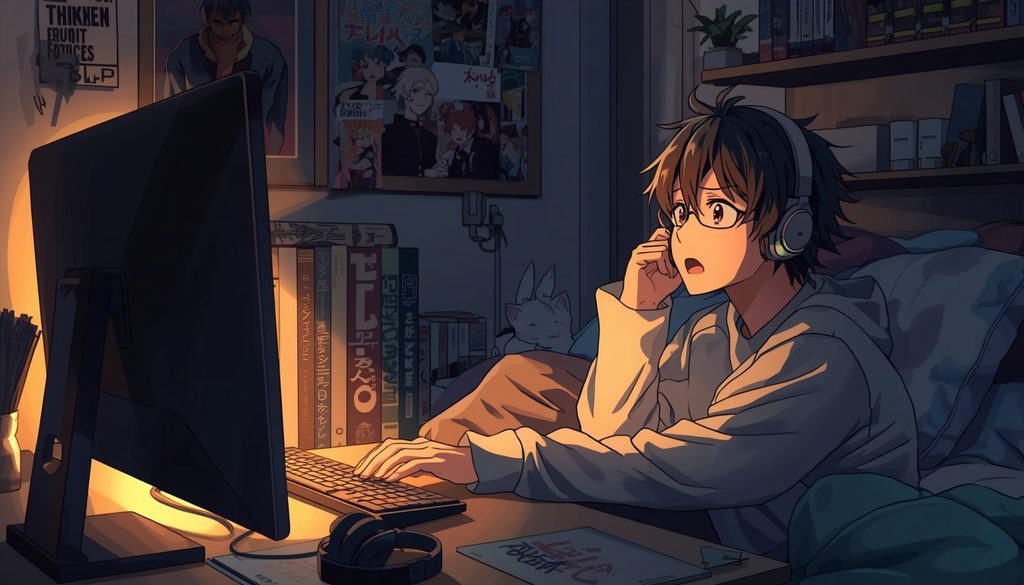
Understanding Japanese Animation
Anime generally refers to animated works associated with Japan and the Japanese animation industry.
The word is commonly used internationally to describe Japanese animation, although in Japan the word anime can be used more broadly for animation.
Anime can be presented as television series, movies, original video productions, and other formats. It can also be based on manga, light novels, games, original stories, or other creative works.
One important thing to understand is that anime is not a single genre.
It is a medium that can tell many different kinds of stories.
For example, one anime might be a romantic drama, while another might be a fantasy adventure involving magic, monsters, and another world.
Japan’s government publication Highlighting Japan also describes anime as a form of Japanese subculture that can communicate Japanese values and culture, while noting that anime can explore subjects ranging from science fiction to everyday social issues.
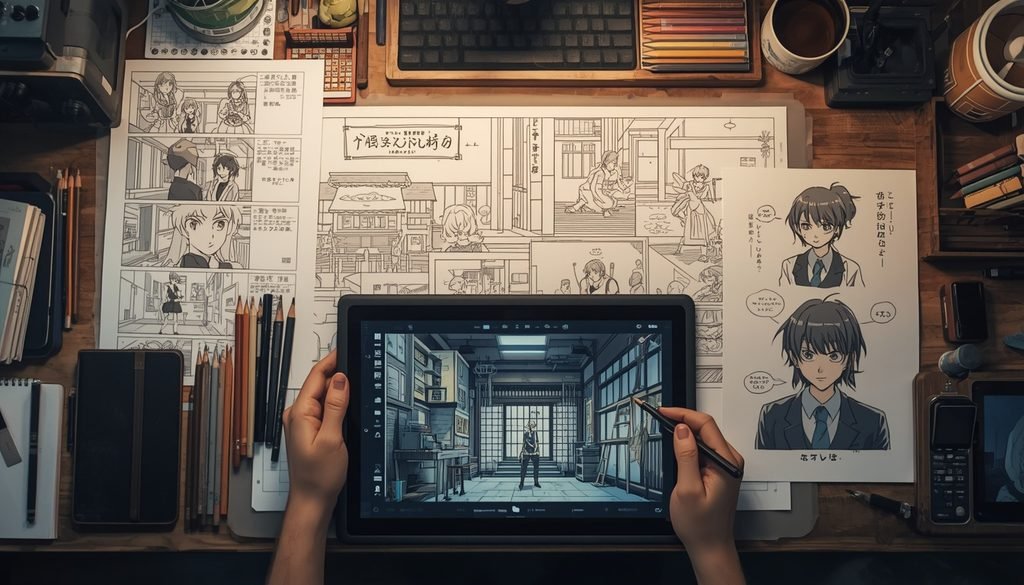
Anime vs. Cartoons: What’s the Difference?
This is one of the most common questions beginners ask.
The simplest answer is that anime is animation, but the term is commonly used outside Japan to refer specifically to Japanese animation.
The difference is not simply that anime has a particular drawing style.
Anime can have many different visual styles depending on the studio, director, story, and target audience.
What makes anime especially interesting to many viewers is the range of stories and emotions it can explore.
Japanese animation has been used to tell stories about:
- Romance
- Friendship
- Family
- School life
- Fantasy
- Adventure
- War
- Science fiction
- Sports
- Comedy
- Horror
- Psychological drama
- Everyday life
Japan’s government has noted that Japanese anime expanded beyond the traditional idea of children’s animation by portraying school life, families, adult relationships, and human drama.
So, if someone tells you that anime is simply “Japanese cartoons for children,” they are missing a huge part of what anime can be.
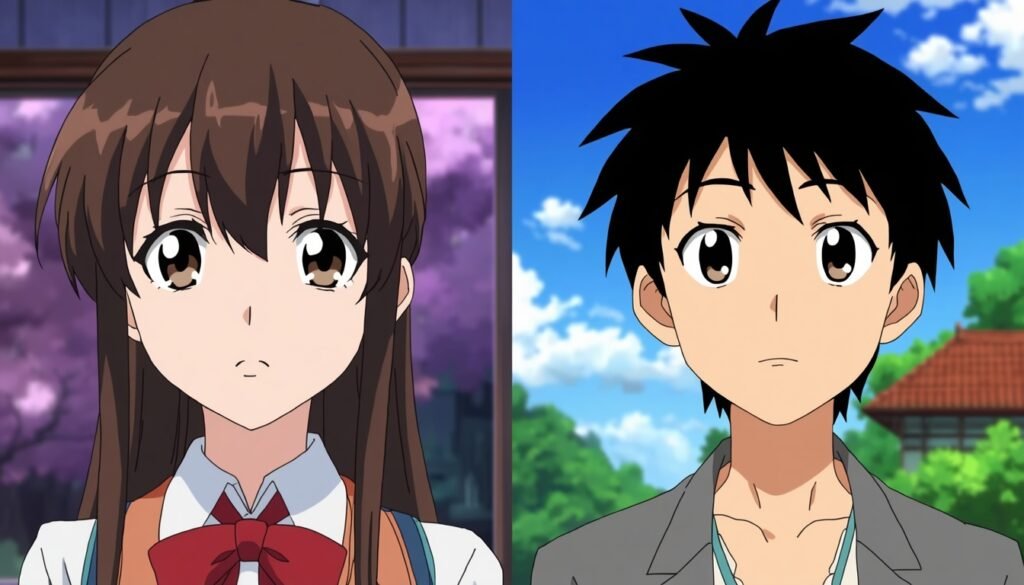
The Emotional side of Japanese animation ?
This is probably the part of anime that I personally enjoy the most.
When I watch anime, I often feel that the characters experience emotions that are similar to emotions we experience in real life.
A character might be fighting a monster in a completely fictional world, but the feelings behind that story can still be familiar.
A character could be afraid of losing a friend.
Someone could be struggling because they feel different from everyone else.
A character could work hard because they want to achieve a dream.
Someone could fall in love.
Another character could fail repeatedly but continue trying.
These emotions don’t require a fantasy world to exist. They are human experiences.
Japanese anime can combine these familiar emotions with imaginative settings, which can make the stories feel both fantastical and relatable. Japanese government sources have similarly highlighted the ability of Japanese animation to portray complex emotions and universal themes that viewers outside Japan can relate to.
Exploring other worlds through Isekai
One of my favorite anime categories is isekai.
The word isekai literally relates to the idea of another world. In many isekai stories, a character leaves their ordinary world and ends up in a completely different world.
That new world might contain:
- Magic
- Monsters
- Adventurers
- Different races
- Powerful abilities
- Kingdoms
- Dungeons
- Fantasy creatures
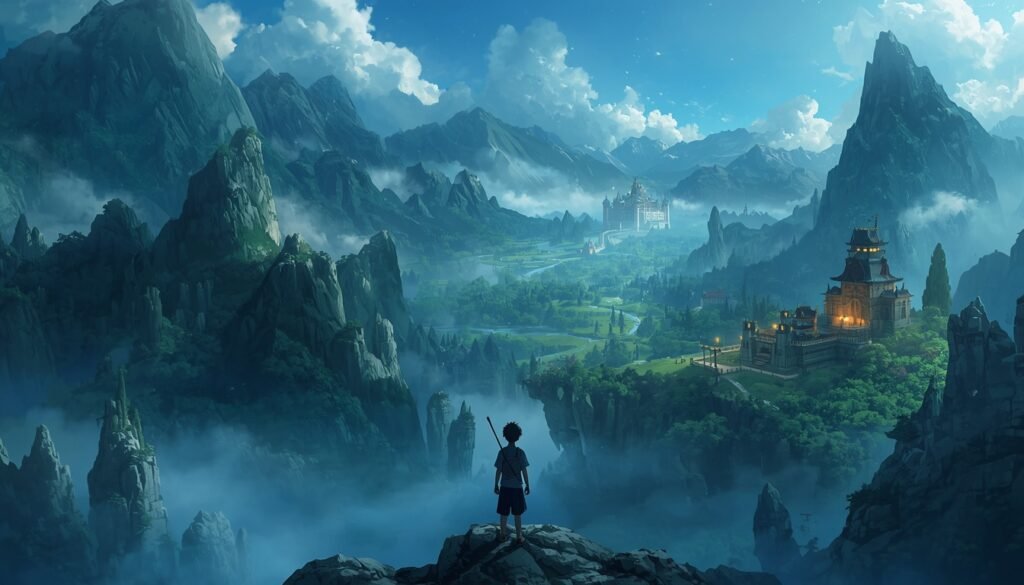
This type of story is particularly interesting to me because it allows me to imagine what life would be like somewhere completely different.
For me, anime can sometimes feel like entering a fantastic world where you can experience the hero’s life almost as if it were your own.
Some Anime I Enjoy
My anime interests are especially connected to fantasy and isekai.
Some of the anime I have enjoyed include:
That Time I Got Reincarnated as a Slime
This is one of the isekai anime that I enjoy.
The story combines fantasy, adventure, monsters, kingdoms, abilities, and character development. The idea of entering another world gives the viewer a chance to explore a completely different environment.
Wistoria: Wand and Sword
I also enjoy Wistoria: Wand and Sword, a fantasy series built around magic and sword fighting.
The official anime website describes it as a high-fantasy action story set around a magic academy, following Will, a student who cannot use magic but continues pursuing his goals with a sword.
That kind of story appeals to me because it combines fantasy, determination, friendship, magic, and action.
The anime’s official website also confirms that a second season was released in 2026 and that production of a third season was announced in June 2026.
Welcome to Demon School! Iruma-kun
I also enjoy Welcome to Demon School! Iruma-kun.
The combination of a different world, supernatural characters, comedy, friendship, and school life makes this type of anime enjoyable for me.
Popular Anime Genres
Anime covers an enormous range of genres and themes.
Here are some categories you may encounter when exploring anime:
| Genre | What you can expect |
|---|---|
| Action | Battles, challenges, powerful abilities and adventures |
| Romance | Love, relationships and emotional connections |
| Fantasy | Magic, mythical creatures and fictional worlds |
| Isekai | Stories involving another world |
| Comedy | Humorous characters and situations |
| Horror | Fear, supernatural events and dark stories |
| Science Fiction | Technology, space, futuristic worlds and scientific ideas |
| Sports | Competition, teamwork and personal growth |
| Slice of Life | Everyday experiences and relationships |
| Drama | Emotional conflicts and character development |
These categories can also overlap.
For example, an anime can be fantasy + romance + action, or isekai + comedy + adventure.
That’s one reason it is difficult to define anime by a single type of story.
Anime Is Not Only About Fighting
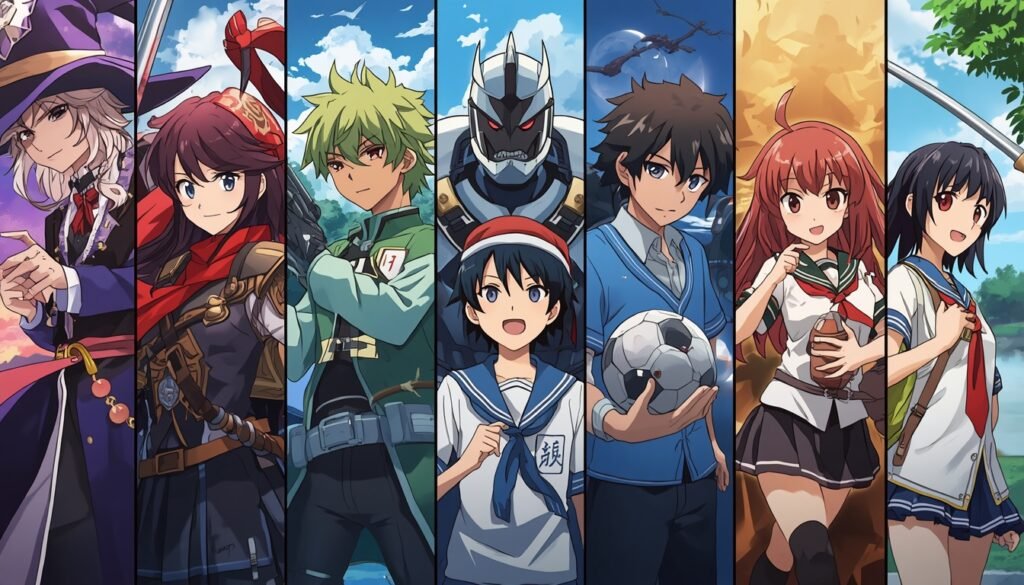
When someone who hasn’t watched anime thinks about it, they may imagine characters fighting with enormous powers.
And yes—anime can absolutely have spectacular battles.
But that’s only one side of it.
Some anime focus almost entirely on everyday life. Others focus on romance, family, friendship, school, personal development, or psychological experiences.
The Japanese government’s Highlighting Japan publication gives examples of anime that combine fictional settings with real-world social issues and everyday concerns.
This variety is one reason anime can attract different kinds of viewers.
Anime and Manga Are Not the Same Thing
Another common beginner question is:
Is manga the same as anime?
No.
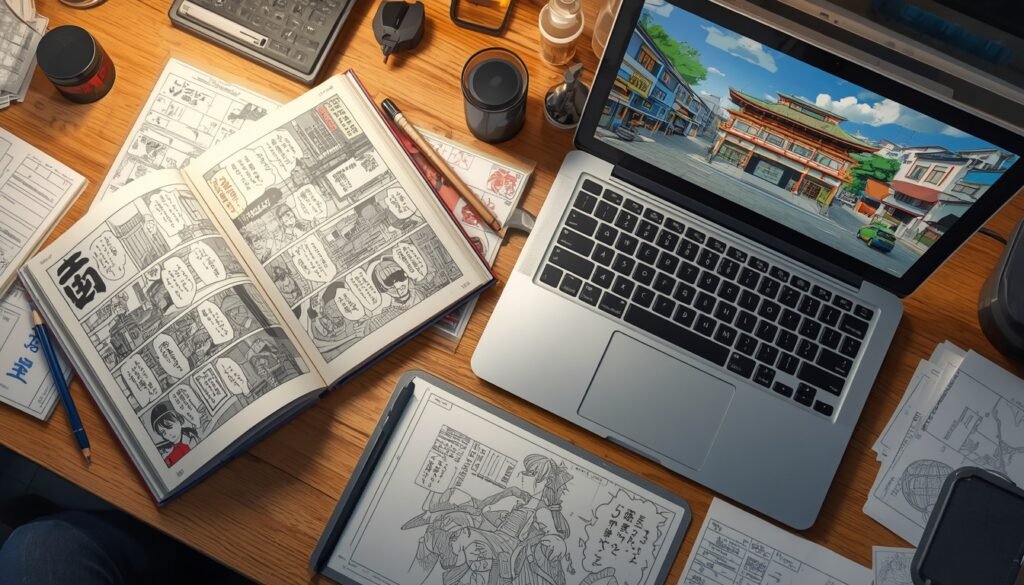
Manga generally refers to Japanese comics and graphic storytelling, while anime refers to animation.
However, the two are closely connected.
Many anime series are adaptations of manga. Other anime can originate from light novels, games, or completely original ideas.
I also read manga, but I want to talk about my manga-reading experience in another article because there is a lot more to explain about the relationship between manga and anime.
Why Has Anime Become Popular Around the World?
Anime is no longer something enjoyed only by Japanese audiences.
Japanese animation has developed an international audience, and its stories can cross cultural boundaries because many of the emotions and themes are universal.
Love, friendship, ambition, failure, family, courage, loneliness, and the desire to achieve something are not limited to one country.
Japanese government publications have also highlighted anime’s international popularity and its ability to communicate Japanese cultural perspectives while using themes that viewers around the world can understand.
For someone watching anime outside Japan, it can therefore be both entertainment and a way to discover elements of Japanese culture.
Why I Personally Love Anime
For me, the biggest reason is emotion.
I don’t watch anime only because the characters look interesting or because the world contains magic.
I enjoy watching characters experience life.
Sometimes they succeed.
Sometimes they fail.
they lose someone.
they find a new friend.
And have a dream that seems impossible.
And sometimes they have to continue even when everything seems to be against them.
That feels very human to me.
A fantastic world can be completely fictional, but the emotions inside that world can still feel real.
That’s what makes anime so engaging for me.
Should You Start Watching Anime?
If you have never watched anime before, I don’t think you need to understand everything about Japanese animation before starting.
Just choose a story that matches your interests.
If you enjoy:
- Fantasy → Try a fantasy anime.
- Another-world stories → Explore isekai.
- Romance → Start with a romance-focused series.
- Action → Look for an action or adventure series.
- Comedy → Try a comedy or school anime.
- Emotional stories → Look for character-driven drama.
Don’t worry if your first anime isn’t perfect for you.
There are thousands of different stories, so finding the right one can take some experimentation.
Final Thoughts: What Is Anime?
So, what is anime?
Anime is Japanese animation associated with a huge variety of stories, genres, characters, and creative styles.
But my personal definition is a little different.
Anime is a fantastic world where you can experience a character’s life and emotions as if they could be your own.
I started watching anime at 20, and I didn’t expect it to become something I would genuinely love. What started with a romantic anime eventually introduced me to fantasy worlds, isekai adventures, emotional characters, magic, friendships, and stories that stayed in my mind after the episode ended.
And perhaps that’s the most interesting thing about anime.
You don’t have to be a child to enjoy it.
You don’t have to know Japanese.
And you don’t have to be an expert in manga or Japanese culture.
You simply need to find a story that speaks to you.
That’s where the journey begins.
About the Author
Aman is an anime fan and aspiring manga creator who enjoys fantasy and isekai stories. He started watching anime at the age of 20 and became interested in the way anime combines imaginative worlds with human emotions and personal struggles. He is also developing his own fantasy manga project and shares his experiences and thoughts about anime, manga, and storytelling.
Frequently Asked Questions
What does anime mean?
Anime is the Japanese term for animation, while outside Japan the word commonly refers specifically to Japanese animation and works associated with Japan’s animation industry.
Is anime only for children?
No. Anime covers many genres and subjects, including romance, family relationships, adult relationships, social issues, fantasy, science fiction, and drama.
Is anime the same as a cartoon?
Anime is a form of animation. Outside Japan, the term usually refers specifically to Japanese animation, while “cartoon” is a much broader term used for animated works from many countries.
What is isekai anime?
Isekai is a category of stories involving another world, often where a character leaves their original world and begins a new life or adventure somewhere else.
Can adults watch anime?
Yes. Anime is made for different audiences and covers subjects ranging from children’s entertainment to complex drama and adult-oriented stories.
Is manga the same as anime?
No. Manga is generally Japanese comics, while anime is animation. However, many anime series are adapted from manga.
Why do people like anime?
Different viewers enjoy anime for different reasons, including storytelling, character development, fantasy worlds, humor, action, romance, art, music, and emotional themes.